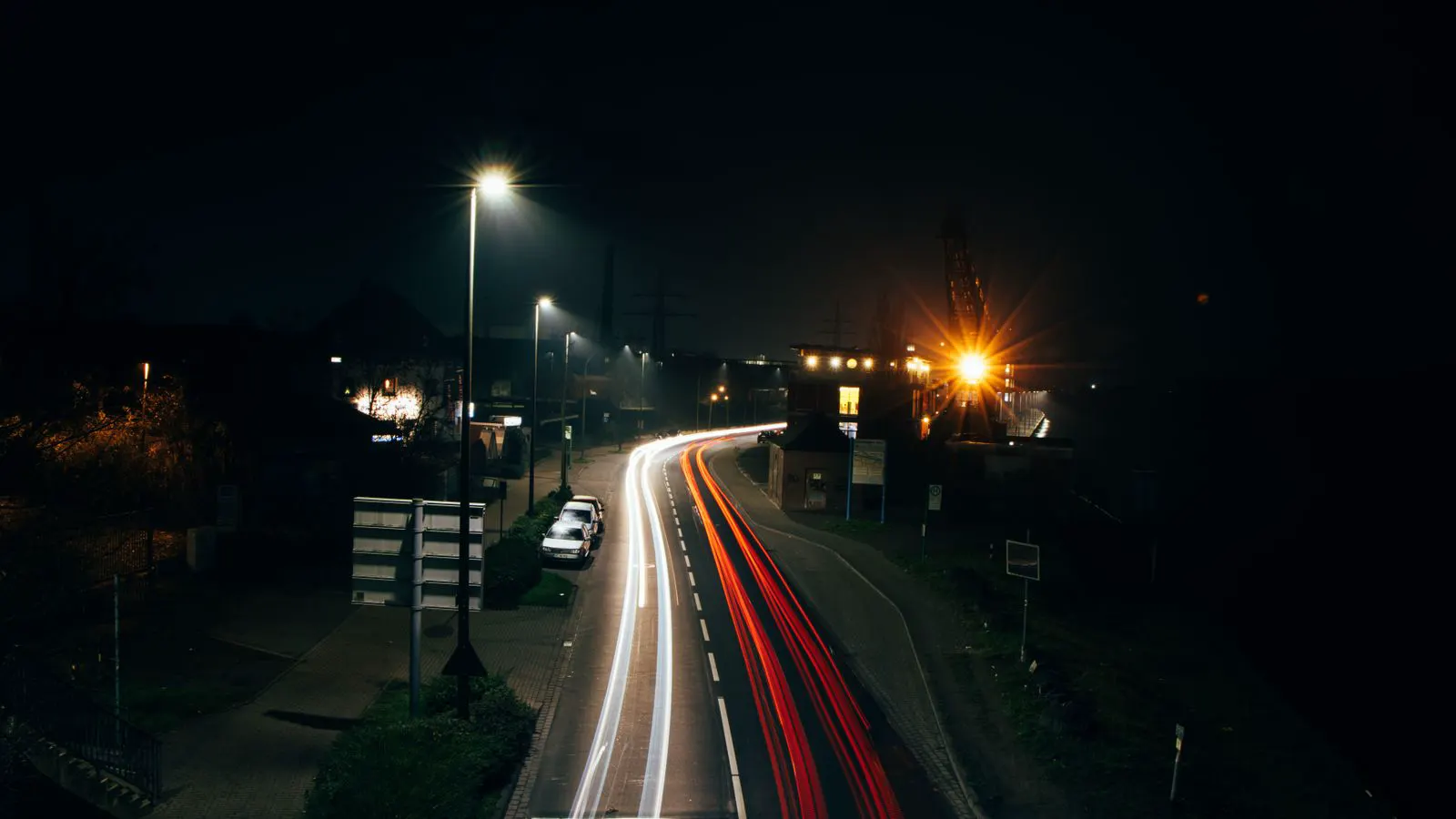
LED Street Lighting Outlook: Trends for 2026
Street lighting buyers should plan for tighter integration of controls with luminaires, modular maintenance, and smarter asset management. The focus shifts from simple replacement to data-driven operations. This guide outlines five shifts to watch and how to prepare your procurement and engineering teams for the coming year.
- Buyers should prioritize luminaires with open communication protocols to support future control upgrades.
- Modular design and accessible drivers reduce long-term maintenance costs and downtime.
- Asset management strategies should move beyond basic inventory tracking to include performance monitoring.
- Procurement documents need to specify data ownership and cybersecurity standards for connected systems.
- Energy efficiency targets are rising, requiring careful balance between lumen output and network load.
The shift from hardware to systems
Street lighting procurement is moving away from buying standalone luminaires. The market now treats each pole as a node in a larger network. This changes how engineers specify equipment. They no longer ask only about lumen output or IP rating. They ask about data access, firmware update paths, and compatibility with existing control layers.
For buyers, this means the specification sheet is no longer enough. The contract must define how the equipment will behave over ten years. A luminaire that looks identical to a competitor’s unit may be useless if its control interface does not match the city’s platform. The physical device is now just the start of a service. When a city installs a new row of lights, the procurement team must consider the data flow. Who reads the sensor data? Where is the log stored? How does the field team access diagnostics? These questions shape the total cost of ownership. A simple fixture with a closed control loop might save money at the point of sale. But it can create long-term lock-in if the city cannot extract the data it needs for planning or maintenance.
The shift also affects the role of the electrical contractor. Installers are no longer just mounting boxes and pulling wire. They are commissioning network nodes. A single misconfigured address can take hours to debug. This requires a closer partnership between the lighting engineer and the IT or control systems team. The specification must define the handover process. It must state who performs the initial network registration and how the system will be validated before payment is released.
Connectivity and control layers
The most visible trend is the consolidation of control functions inside the luminaire itself. Older systems often relied on external sensors, photocells, and separate controllers. Newer LED street lighting fixtures integrate these functions into a single microcontroller. This reduces the number of external components that can fail. Fewer moving parts means fewer points of failure. It also simplifies the physical installation. Instead of running a separate cable to a photocell, the light senses ambient light directly. This cuts labor costs and reduces the risk of cable damage during maintenance work.
However, this integration creates a dependency on the manufacturer’s software. If a city installs a mix of units from different vendors, the network can become fragmented. A practical step for 2026 is to require open communication protocols in your tender documents. This ensures that the lighting controller can talk to the luminaires without proprietary locks. Open protocols allow the city to choose a third-party monitoring tool if it wants. They also make it easier to replace the control platform in ten years without replacing the lights.
The table below compares common control architectures. It helps buyers understand the trade-offs between simplicity and flexibility.
| Control Architecture | Description | Buyer Consideration |
|---|---|---|
| Standalone Photocell | Basic light sensing inside the fixture | Low cost, no network required, limited data |
| Networked Dimming | Central controller adjusts brightness per zone | Requires stable power data, higher initial cost |
| Edge Computing | Local processor handles sensor logic | Reduces load on central server, higher unit cost |
| Cloud Managed | All data and logic run on remote platform | Scalable, but depends on internet connectivity |
Most large municipal projects are moving toward networked dimming or edge computing. Cloud management is growing, but it introduces questions about data sovereignty and latency. Buyers should decide which data stays local and which goes to the cloud before they write the bid. For example, a city might want to keep raw sensor logs on a local server for security reasons. It might send only aggregated usage reports to a cloud dashboard for planning. This separation of concerns is a key part of modern specification writing. It protects the critical infrastructure from internet outages while still allowing high-level analytics.
Maintenance models and modular design
The cost of street lighting is no longer driven by the purchase price. It is driven by the cost of keeping the light on. A failed driver on a pole in a remote area can cost more to fix than the luminaire itself. This is why modular design is a critical trend for 2026.
Buyers should look for fixtures where the LED driver and the power supply can be replaced without taking the entire unit down. Some newer outdoor LED lights use a design where the driver sits in a removable module. This cuts replacement time from hours to minutes. It also allows maintenance crews to carry spare modules in a van instead of heavy cranes.
Consider a typical rural road. A pole is located fifty meters from the nearest road. The standard procedure for replacing a fixture involves a bucket truck, two technicians, and a full day of work. If the fixture is modular, the crew can climb to the pole and swap the driver module in twenty minutes. They can then drive to the next fault. This changes the economics of maintenance. The labor cost drops significantly. The downtime for that section of the road also drops. For a city managing thousands of poles, these small savings add up quickly.
Another shift is the move from reactive to predictive maintenance. By monitoring voltage and current draw, a system can flag a failing driver before it dies completely. This prevents total blackout zones. For planners, this means shifting budget from emergency repair crews to a small team of technicians with diagnostic tools. The goal is to keep the asset base alive with smaller, more frequent interventions. Instead of waiting for a light to go out, the technician gets a notification that the current draw is drifting out of spec. They schedule a repair for the next planned window. This reduces the number of emergency calls and allows for better planning of parts and personnel.
Data ownership and cybersecurity
As lighting systems collect more data, they become targets. A connected street light is not just a lamp. It is a sensor that reports location, status, and sometimes video if a camera is attached. If the system is not secure, it can be a backdoor into the city’s network.
In 2026, procurement teams need to be specific about data ownership. Who owns the data generated by the LEDs? Can the vendor access it remotely? Can the city delete it? These questions must be answered in the contract. Data ownership is a legal issue as much as a technical one. If the city pays for the hardware, it should own the data generated by that hardware. The contract should state that the vendor cannot sell or share this data with third parties without explicit consent.
Cybersecurity standards are also becoming a baseline requirement. Look for units that support secure boot and encrypted communication. Secure boot ensures that the hardware only runs trusted software. It prevents an attacker from loading malicious code during the startup process. Encrypted communication protects the data in transit. Even if an attacker taps the network cable, they cannot read the status messages.
A luminaire that can be bricked by a bad firmware update is a liability. The specification should require that the vendor provides a clear path for security patches. If the vendor goes out of business, the city needs to know if it can still secure the lights. This is why buyers should ask about the end-of-life policy. Does the vendor commit to providing security updates for ten years? What happens if the vendor is acquired? The contract should require that source code or update keys are escrowed with a third party. This ensures that the city can maintain the system even if the original vendor disappears.
Energy efficiency and network load
The push for lower energy consumption continues, but it is hitting a ceiling. Modern LED street lighting has already reached high efficiency levels. The next gains come from managing the network, not just changing the bulb.
Dimming is the biggest lever. Reducing output to 50 percent during low-traffic hours saves significant energy. However, it also stresses the power electronics. Deep dimming over many years can shorten the life of the LEDs and drivers. Buyers need to balance energy savings against asset longevity. A simple linear relationship does not apply. The heat generated by the driver changes when the load changes. Frequent dimming cycles can accelerate the degradation of the solder joints. The specification should define the dimming profile. For example, a city might want 100 percent during business hours and 30 percent at night. It should avoid deep dimming below 20 percent if possible, unless the fixture is specifically rated for it.
There is also a growing focus on grid stability. As cities add more electric vehicles and heat pumps, the grid becomes more sensitive. Street lighting loads are distributed and often predictable. Smart lighting can help smooth out demand peaks. Some systems are being designed to provide temporary power support during grid stress events. This is an emerging area for large urban projects. In some cases, the energy stored in the batteries of the street lights can be used to stabilize the local grid. This turns the street lighting network into a distributed energy resource. It requires close coordination with the utility provider. The city needs to understand the grid codes and the impact of adding thousands of small power sources.
Preparing for the next cycle
How should buyers prepare for these shifts? The first step is an audit of the existing asset base. You cannot plan for the future if you do not know what you have. Create a map of every pole, including the make, model, age, and control type. This data is the foundation for any replacement strategy.
Start with the poles that are failing first. These are the ones that need replacement soonest. Use this data to identify patterns. Are certain manufacturers failing more often? Are specific locations causing more issues? This information helps you prioritize your budget. It also helps you negotiate better terms with vendors. If you know you have five hundred poles from a specific brand that are nearing the end of their life, you have use. You can ask for a phased replacement plan that aligns with the vendor’s production cycle.
The second step is to standardize your interfaces. If you have ten different types of drivers and ten different control protocols, you are paying a complexity tax. For new projects, aim for a smaller set of compatible units. This reduces training time for crews and simplifies spare parts inventory. When a crew arrives on site, they should not have to guess which tool or spare part to bring. A standardized interface means the same spare driver fits all the new poles. It means the same software interface works with all the new lights. This simplicity reduces human error and speeds up the installation process.
The third step is to update your procurement templates. Old bid documents often assume a simple hardware purchase. They need to be rewritten to cover software updates, data rights, and cybersecurity. This is a legal and technical exercise that should involve both your IT and engineering teams. The IT team can review the data security clauses. The engineering team can verify the technical specifications. Together, they can ensure that the contract reflects the true nature of the product. It is no longer a box that lights up. It is a service that requires ongoing management.
Final thoughts on planning
The 2026 outlook for LED street lighting is about integration. The physical lamp is now a device in a digital system. The buyers who plan well will be those who treat the network as the primary asset, not the metal pole. They will specify for flexibility, demand data access, and design for easy repair. The result is a system that costs less to run and lasts longer.
This shift requires a change in mindset. It is no longer enough to buy the cheapest luminaire. The total cost of ownership includes the cost of maintaining the network, securing the data, and managing the software. Buyers who understand this will make better decisions. They will avoid short-term savings that lead to long-term problems. They will choose partners who are willing to support the system over its full life. The shift is already here. The only question is how quickly your procurement process can adapt to it.
Frequently asked questions
Do I need to replace all my street lights to get smart features?
No. Many existing fixtures can be retrofitted with smart drivers or added controllers. A full replacement is only needed if the physical structure or electrical capacity is too old to support new loads.
What is the biggest risk with connected street lighting?
The biggest risk is vendor lock-in. If the software and hardware are tied to one provider, you lose control over your data and future upgrades. Always require open standards and data portability in your contracts.
How long does it take to install a modular LED driver?
It varies by fixture design, but typically between five and twenty minutes. This is significantly faster than replacing the entire luminaire assembly, which can take hours.
Is dimming safe for all LED types?
Most modern LEDs are dimmable, but not all are designed for deep dimming. Check the datasheet for minimum dimming levels. Dimming below the specified limit can reduce lifespan and cause flickering.
What should I look for in a cybersecurity specification?
Look for support for encrypted communication, secure boot processes, and a defined patch management policy. The vendor should also provide a clear plan for end-of-life security support.